· Abraham · Alyss AI · 4 min read
Alyss AI Founding Manifesto
An act of personal resistance, a legacy of love, and a stake in digital sovereignty in the age of AI.
Sometimes I begin something without fully knowing why: intuition, necessity, experimentation, or a blend of them all. I can’t be sure. But as AI advances globally, and news breaks of new tools and their capabilities, I feel an increasing unease. A voice echoes within me, insisting that something isn’t right that I must take action.
The Challenge of Unlearning and the Path to Linux
On one hand, I feel adrift; what I once knew is now done differently. The value of my knowledge isn’t gone, but it is degrading, requiring a forced recycle. There is anxiety in that. Does knowing how “old combustion engines” worked help you understand the new ones better? Then comes the reality check from peers and forums: the learning speed of the new generation is staggering. I refuse to be left behind; I am driven by a hunger for knowledge and the fear of losing control.
That voice has been echoing for years. Its first ripple was my move from Windows 11 in 2023 to dive headfirst into Linux. The reasons? A bloated system, telemetry, and the constant pressure of eroding privacy. Today, my only regret is not starting sooner. But the voice didn’t stop once I abandoned my tools for office work, editing, or virtual machines. It only grew louder: “Build a local server, now a VPS, deploy your own services with Docker, claim your digital sovereignty…”
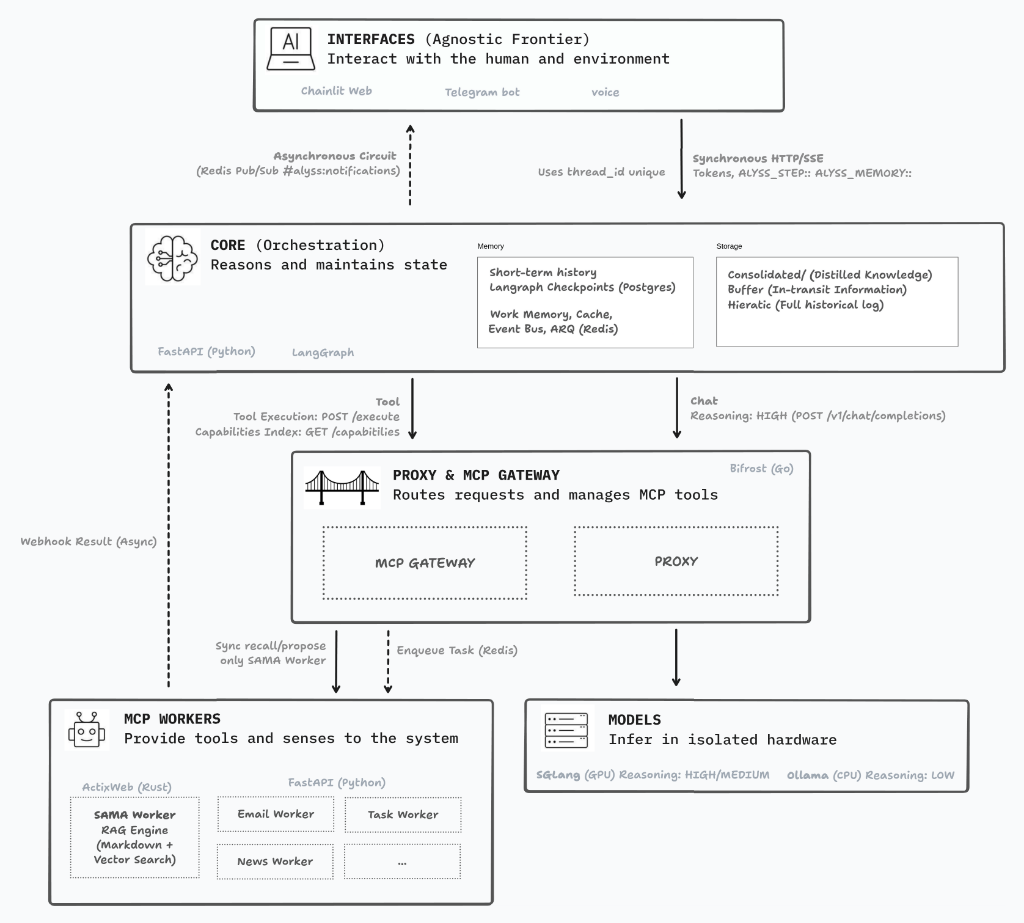
Architecting My Assistant
And just when I thought I had silenced it, it now screams: Take control of the AI; stop surrendering your data. I know I’ve stepped onto a difficult path, even if running competitive local models is becoming more viable by the day a gap that will only narrow with time.
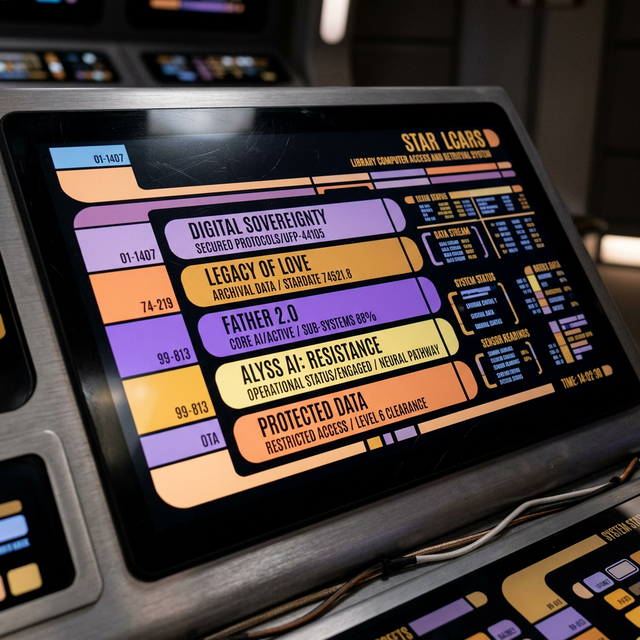
The arrival of AI feels like when I first discovered the Internet in the late 90s: equal parts fascination and obsession. I firmly believe we are facing a historic shift. I want to weave it into my life, but on my terms. I want my own assistant not a heartless Alexa, but something akin to the Enterprise computer in Star Trek; something that knows who I am. I haven’t lost my bearings: I’m not looking for “poly-amory” with an AI, nor do I trust it as a secret confidant. But it is vital that it knows me fully. Only then will it be truly useful.
My Son’s Sovereignty and Father 2.0
When I embraced Linux, I sought anonymity and privacy. Encryption, VPNs, and proxies became daily staples, yet my digital footprint is indelible. Even if I wanted to erase it, I couldn’t; my triumphs and failures are there, exposed to whoever might look.
But my son is my motivation. He is already “profiled” simply by existing, despite being only four years old. I want to protect him not just in the physical world, but by providing the best digital future I can afford. I must guard his privacy so he can be the sovereign of what he chooses to share. To do that, I must learn first. I must harden my home security and master the tools that protect privacy in the age of AI.
Another thought haunts me: What if I manage to make Alyss AI absorb, over time, my values, my actions, my thoughts, and my anxieties? What if I can store who I am, at least partially? Could a digital version of myself emerge to speak with him or my grandchildren long after I am gone? A Father 2.0. A sort of Hari Seldon from Asimov’s universe?
The thought is terrifying for its emotional weight, yet wonderful. The day I leave this world, I will leave behind physical belongings, but also a digital one. Photos, videos, audio… and also, in a folder with a handful of text files, my essence processed by Alyss AI.
The Manifesto
Alyss AI is not intended to be just an assistant; it is an act of personal resistance, a legacy of love, and a bet on a future where AI serves the individual, not the other way around. It begins now: with a local model, an encrypted vault, and the resolve to stop yielding unnecessary data. Because if we do not take control, others will take it for us.
Author's Note: English is not my mother tongue. While I lean on digital tools for translation, I personally oversee every word to ensure that the human intent and the original soul of my Spanish writing remain intact. This is a journey of ideas, not just algorithms.